
Athlete’s Foot & The Gut – Skin Axis

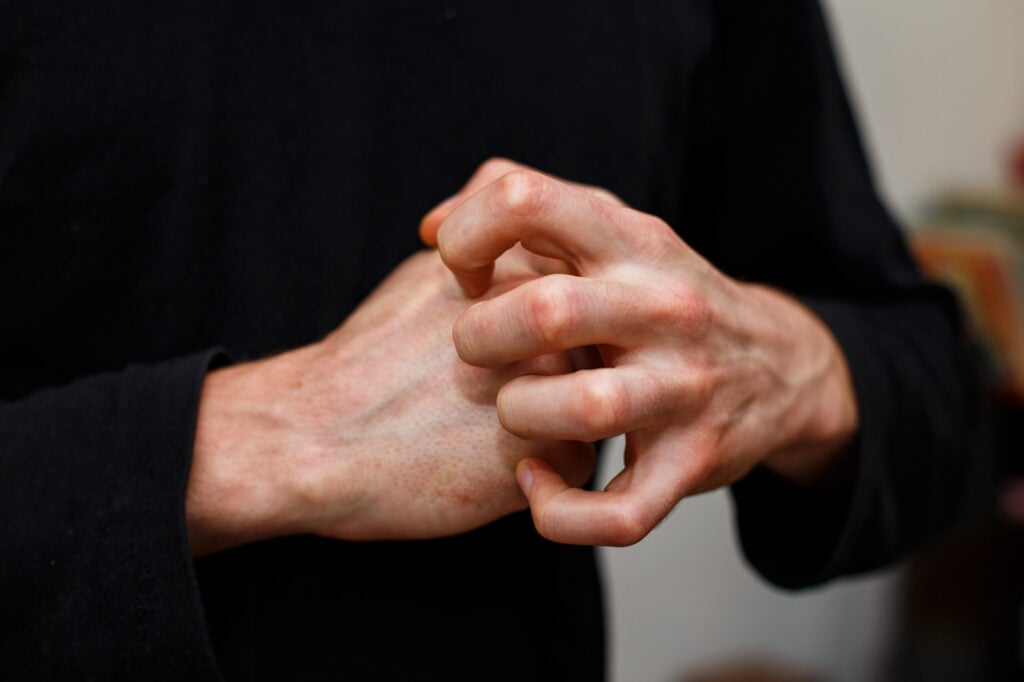
Did you know that your gut affects your skin health? Read about the gut-skin axis and different skin conditions in our latest blog series. We have written about psoriasis here and here, rosacea, eczema and acne.
Today we look at Athlete’s Foot.
In this blog, you will learn:
- What is Athlete’s Foot & how does it relate to the gut-skin axis?
- What are the triggers for Athlete’s Foot?
- How can Athlete’s Foot be treated naturally?
What is Athlete’s Foot?
Athlete’s Foot is a fungal infection on the skin of the feet, usually between the toes. It causes redness, itching or scaly skin. The medical name for Athlete’s Foot is tinea pedis.
Athlete’s foot is caused by dermatophytes. Dermatophytes are a type of fungi that grow as molds. They cause infections like ringworm and athlete’s foot. The main species of dermatophytes are Trichophyton rubrum, T mentagrophytes, T interdigitale and Epidermophyton floccosum. They feed on keratin, a protein found in skin, hair and nails.
Direct contact with dermatophytes is typically how the infection starts. Dermatophytes grow in hot and humid environments. Public pools and showers with water are where many infections are likely to be contracted. It can happen when walking barefoot in locker rooms, public showers and swimming pools. In fact, Athlete’s Foot is more common in people who use public showers and pools and have long exposures to water.
Dermatophytes can grow when wearing tightly fitting footwear with sweaty feet for a long time. Wearing completely closed shoes that can’t breathe for long periods of time increases the risk of dermatophyte infections.
Athlete’s Foot is contagious. It can spread through person-to-person contact, contaminated surfaces or objects. It can spread to other parts of the body after touching the infection. It can spread by indirect contact with the contaminated belongings of someone with Athlete’s Foot. Transmission amongst family members is very common. Thoroughly washing hands after touching areas with Athlete’s Foot can reduce this risk of spreading.
- Approximately 10% of the world population have tinea pedis (Nigam P, 2023).
- The peak age incidence is between 16 and 45 years of age (Nigam P, 2023).
- Tinea pedis is more common among men than women (Leung AK, 2023).
The Mechanism of Action of Athlete’s Foot
The fungi that cause Athlete’s Foot grow in the keratin of the skin on the feet. The fungi produce enzymes called keratinases. These enzymes break down keratin, the main protein in the skin’s outer layer, allowing the fungi to penetrate and colonize the skin. The warm, moist environments where dermatophytes are found allows for the fungi to grow and spread.
In response to the infection, the body mounts an inflammatory immune response. This causes the classic symptoms of athlete’s foot; redness, itching, scaling and sometimes blistering.
How is Athlete’s Foot Linked to the Gut?
A balanced and healthy gut is essential for overall good health. Any imbalance in gut health can increase susceptibility to health issues. This is because 70-80% of immune cells reside in the gut. This means that immune strength is directly linked to gut health.
Poor gut health can leave one vulnerable to chronic inflammation and health problems. Imbalances in gut microbiota or dysbiosis weakens the immune system and skin barrier function. This can potentially increase risk of infections like Athlete’s Foot.
A disrupted gut microbiome disrupts the skin microbiome. This weakens the skin barrier. Dysbiosis, leaky gut and weak immune health are all disruptive to the skin microbiome. An impaired skin microbiome allows for something like a fungal infection to be able to take root.
- Gut imbalances and issues weaken the skin’s defenses. Dysbiosis of the skin and/or gut microbiome increases risk of athlete’s foot. Leaky gut increases risk.
- A compromised skin barrier raises the likelihood of developing an infection. Skin conditions that cause skin dryness, like eczema can weaken the skin barrier and make it easier for fungi to overgrow. A weak skin barrier in the form of small cuts on the feet or dry and cracked skin can allow the fungus to enter.
- People with a weak immune system, diabetes, HIV, autoimmune disorders or on immunosuppressive drugs are more prone to infections. Poor circulation due to conditions like diabetes or neuropathy can also increase risk of skin infections of the feet.
Other Risk Factors for Athlete’s Foot
There are certain factors that are easy to control which can reduce the chances of getting athlete’s foot:
- Avoid direct contact with the fungi in warm, moist environments such as locker rooms, communal showers and swimming pools. Wear sandals or flip flops to prevent contact with possibly contaminated floors.
- Don’t wear tight, closed shoes that don’t breathe well.
- Practice good foot hygiene and dry feet properly after bathing or sweating. Keep feet dry and avoid having sweaty feet.
- Don’t wear the same socks or shoes for long periods. Change socks every day.
- Don’t share shoes or towels.
Complications with Athlete’s Foot
Athlete’s Foot can resemble other conditions and it can transform into other conditions. A fungal infection can look like eczema with dry, red, itchy and flaky skin. Athlete’s Foot can be mistaken for eczema or trigger eczema-like reactions.
A fungal infection like athlete’s foot can trigger an immune response elsewhere on the body, such as blisters or eczema-like rash on hands or arms (Nigam P, 2023). If chronic, Athlete’s Foot can irritate the skin and cause a secondary bacterial infection. The compromised skin barrier enables bacteria to enter, potentially leading to more infections. It can turn into secondary eczema in some cases.
If untreated or poorly managed, the fungal infection between the toes can turn into a fungal infection in the toenails. The fungus can infiltrate the nail and lead to thickened, discolored and brittle nails
What is the Treatment for Athlete’s Foot?
In conventional medicine, a topical antifungal treatment is commonly used. There are a number of topical antifungal creams that are OTC. Prescription antifungal creams are also available. This may be necessary in an extreme or persistent case. But we can often start with natural approaches to avoid these creams.
To Read About Blog Topic, Scroll Down
Want To Work With Our Clinic?
Do you have a chronic or mystery illness that no one has been able to help you with? Are you simply wanting to re-connect with a healthier version of yourself? It’s Time To Finally Feel Better!
Natural Treatments for Athlete’s Foot
- Tea tree essential oil is antifungal and antibacterial. It can be applied on Athlete’s Foot to kill the fungal infection (Freeman M, 2019). Dilute it with a carrier oil like coconut oil or olive oil before applying it to skin. Mix 2–3 drops of tea tree oil with 1 teaspoon of carrier oil.
- Coconut oil contains lauric acid and caprylic acid. These both moisturize and are antifungal. Coconut oil can be used as a carrier oil with tea tree oil or it can be used on its own for athlete’s foot treatment (Pattnaik S, 1996).
- Garlic has strong antifungal and anti-dermatophytic effects against different species of dermatophytes that cause athlete’s foot (Mercy, 2014). It is comparable to standard antifungal drugs (Mercy, 2014). Garlic can be crushed and applied to the affected area. It might possibly irritate sensitive skin.
- Apple cider vinegar (ACV) has antifungal properties and inhibits various fungal species (Niamat H, 2020). ACV has active compounds like phenolics, flavonoids and others which are antifungal and anti-oxidant (Niamat H, 2020). It helps improve the skin microbiome and skin conditions. Vinegar can be used as an alternative to synthetic antifungal agents which may have side effects (Niamat H, 2020). It can be used in foot soaks of 1 part ACV to 2 parts water. Soak foot in ACV daily or every other day for 15–20 minutes. Dry feet completely afterward.
- Baking soda is a good natural foot powder to keep feet dry and reduce fungus. Sodium bicarbonate, or baking soda, is antifungal and has significant fungicidal abilities against fungal infections (Hosseini S, 2022).
- Sea salt, or sodium chloride, has antifungal and antibacterial properties (Stockwell MP, 2012). An Epsom salt soak reduces inflammation and can relieve fungal infections (Stockwell MP, 2012). Soak feet in Epsom salt with warm water for 15–20 minutes.
- Defense soap is an antifungal soap made with tea tree oil and eucalyptus oil. It is often used by athletes to prevent or treat infections like athlete’s foot. It is antifungal, antibacterial and antimicrobial. The tea tree oil and eucalyptus oil target fungi and bacteria. Defense soap is very effective but it should not be overused. Long-term use without need can disrupt beneficial microbes on the skin, decrease microbial diversity and weaken the skin microbiome. This can cause dryness or irritation or even allow for another issue to take hold like eczema. Use Defense soap only when needed such as after the gym, sweating or having a fungal exposure. Don’t use it as a daily soap if you don’t have athlete’s foot or specific risk factors.
Ozonated Glycerine
An interesting and new approach to treating Athlete’s Foot is to use ozonated glycerine. Ozonated glycerine is ozone gas infused into glycerine. Glycerine is a sugar alcohol liquid. Ozonated glycerine quickly kills bacteria, viruses, fungi, protozoa and other pathogens. It dissolves biofilms behind which these infections hide.
Ozonated glycerine is very effective in treating tinea pedis. Treatment time is 6 weeks, applied twice daily. It is safe, well tolerated and as effective as antifungal medications (Domínguez YF, 2025). In research, ozonated glycerine treats Athlete’s Foot compared to antifungal medications with no obvious side effects (Araby S, 2023). After 6 months, a follow-up was done. Patients had no recurrence of athlete’s foot while the control group using a popular antifungal medication had a 4% recurrence (Araby S, 2023).
Lifestyle factors can help:
- Avoid walking barefoot in public locker rooms, showers or pools where dermatophytes grow.
- Keep feet clean and dry. Wash feet thoroughly every day, especially between toes.
- Wear clean, dry socks and change socks daily, especially if feet get sweaty.
- Wear breathable footwear. Synthetic shoes don’t allow airflow. Rotate shoes so they can air out.
- Keep toenails trimmed and clean. Fungi can hide under nails.
Improve Gut Health
Gut health is the foundation of overall health, immune health and skin health. Improving gut health will help treat and prevent recurrence of athlete’s foot. By treating gut issues, it will improve the immune and skin defenses. Frequent fungal infections indicate a systemic imbalance. Resolve issues like gut dysbiosis, Candida or leaky gut. A propensity for eczema, psoriasis or other inflammatory skin issues is tied to gut-skin axis health.
What are Gut-Supportive Approaches for Athlete’s Foot?
Follow a simple gut-healing plan to support gut, skin and overall health to treat athlete’s foot:
Anti-inflammatory Diet
- Reduce or eliminate sugar and refined carbs. They are inflammatory and feed harmful gut bacteria and fungi.
- Eat whole foods: vegetables, fruits, lean proteins, healthy fats.
- Avoid processed foods, artificial additives and excessive alcohol.
- Bone broth or collagen support gut lining repair.
- Address food sensitivities such as gluten or dairy.
Probiotics
- Take a high-quality probiotic supplement with Lactobacillus and Bifidobacterium strains.
- Eat fermented foods high in probiotics: unsweetened yogurt with live cultures, kefir, sauerkraut, kimchi, miso or tempeh.
Prebiotics
- These feed the good gut bacteria. Eat high fiber foods: garlic, onions, leeks, asparagus, bananas, oats, chicory root, Jerusalem artichoke.
Stay Hydrated
- Drink plenty of clean filtered water to flush toxins and support digestion.
Manage Stress
- Stress disrupts gut health. Reduce stress and relax with techniques such as meditation, deep breathing, light exercise.
Avoid Antibiotics Unless Necessary
- They kill good bacteria and can worsen dysbiosis.
**************
Natural methods may take longer to clear the infection. If you are suffering from symptoms of athlete’s foot or other skin issues then get in touch with us at the Medicine with Heart clinic. We can help you to best manage and optimize your gut-skin health!
*** Follow us for our next blog on anti-aging strategies for the skin ***
Are You Suffering From A Chronic Illness?
Does your current health situation look like this…
- Do you feel that you have tried many things and either nothing works, or the treatment does not hold?
- Have you been told that there is nothing that can be done to reverse your illness and you just need to manage symptoms?
- Does your illness impact your work, your family, your happiness and your social life?
We specialize in finding answers and solutions for complicated chronic illness when people feel like they have tried everything. If this sounds like you, book a free call with us to see if we are the right fit for your health goals.