
Menopause and Hair Health

Does Menopause Cause Hair Thinning or Hair Loss?
Hair can be an important part of our appearance and even our identity. It symbolizes vitality. Hair can thin or fall out due to the hormonal changes of menopause. 52% of women over the age of 50 experience female pattern hair loss (Chaikittisilpa S, 2022).
In this blog you will learn:
- How menopause affects hair health
- How you can improve your hair health while going through menopause
Menopause & Hair Loss
The 2 most common types of menopausal hair loss are (Chaikittisilpa S, 2022):
- Female pattern hair loss or FPHL (androgenic alopecia)
- Telogen effluvium or TE
In FPHL the drop in hormones, specifically estrogen and progesterone, is the issue. Estrogen and progesterone help promote healthy hair growth. The decline in hormones can cause the hair follicles to shrink and weaken, potentially leading to thinning hair.
TE can be caused by fluctuating hormones or stress. Many women experience TE during menopause. Telogen effluvium often occurs in conjunction with an iron deficiency in pre-menopause women. TE is usually not permanent.
Other factors like family history, other medical issues, diet, stress levels and lifestyle can contribute to hair thinning or hair loss (Chaikittisilpa S, 2022).
How does Menopause Affect Hair Health?
In menopause, the decline in estrogen can cause hair follicles to become thinner and more likely to shed. High estrogen levels before menopause helps keep hair in the growth phase and stops it from shedding quickly. With menopause, estrogen levels decrease significantly and disrupt the hair cycle. Hair follicles can become thinner and weaker, resulting in hair loss or thinning.
There is an increase in androgen, or male hormones, during menopause which can contribute to hair loss. Testosterone itself isn’t the problem. It’s a hormone called dihydrotestosterone (DHT), which is derived from testosterone. The conversion of testosterone to DHT and its interaction with hair follicles can cause a problem. In some women, DHT can attach to hair follicles and shrink them over time. This is known as miniaturization and can cause thinner finer hair and possibly hair loss. It is similar to male pattern baldness but can happen to a woman going through menopause.
- Androgens, estrogen and progesterone have all been shown to affect the hair cycle.
- Increased estrogen levels can promote the anagen or growth phase in hair follicles.
- FPHL commonly presents in menopause (Kamp E, 2022)
What are Other Causes of Hair Thinning or Loss in Women?
- A poor diet low in iron
- Other nutrient deficiencies
- Excessive stress
- Hormonal changes including pregnancy, post-partum & menopause
- Damaging products & over styling
How to Optimize Hair Health during Menopause?
Hair loss during menopause can be distressing. The good news is that hormonal hair loss can grow back after menopause. In order to help, it is important to get the basics right. We can support hair growth with a hair-promoting diet, the right supplements, stress reduction and other good lifestyle habits.
Eat a Hair-Healthy Diet
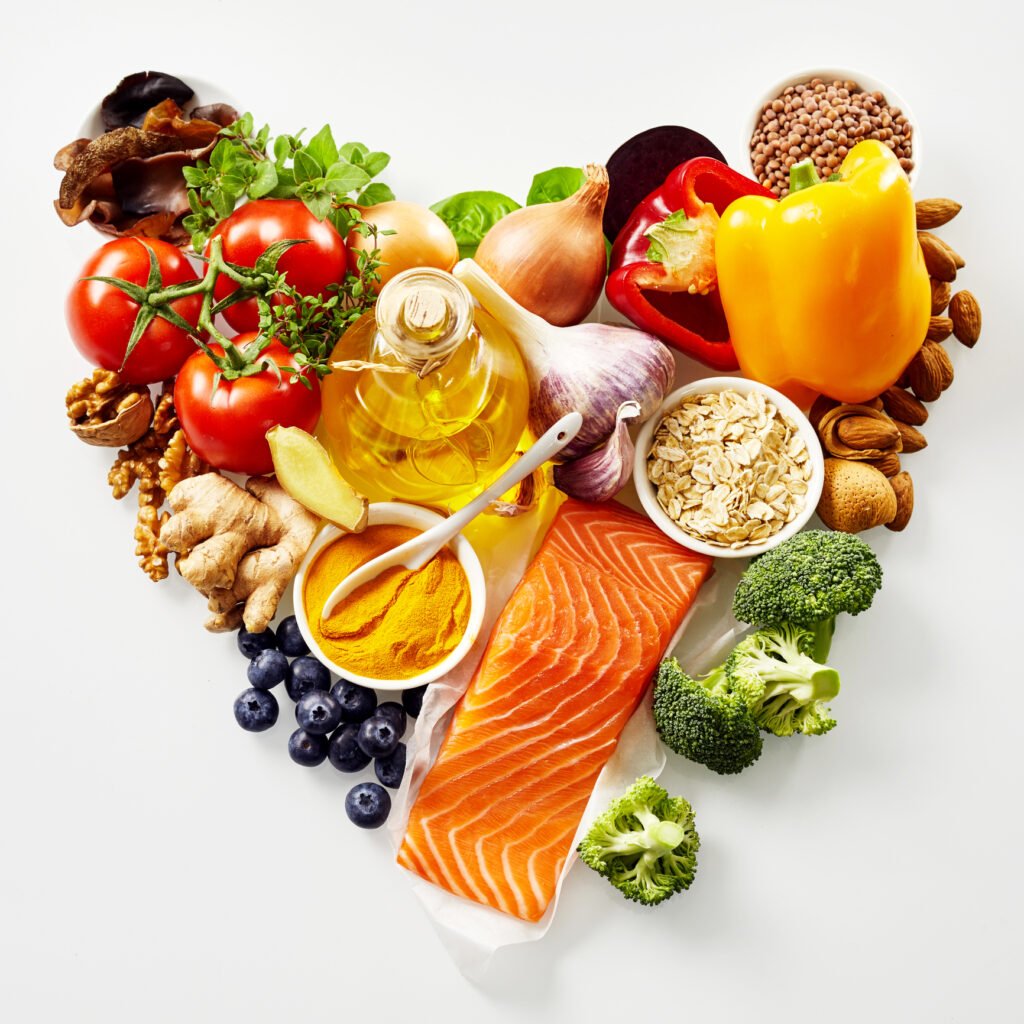
Diet is essential for hormone balance, hair health and good overall health. A balanced whole foods diet can prevent deficiencies in the important vitamins or minerals essential to the hair building process.
Prioritize protein and iron.
Protein is extremely important for hair health. We should aim to consume between 1 to 2 grams of protein per kilogram of body weight. Your weight in kg’s is about half of that in pounds. So, a 120 lb. woman weighs about 55kg and should be eating 55-110 grams of protein. 55 grams of protein is not the same as the weight of your food. This is actual grams of protein per egg (5 grams of protein are in 1 egg) or chicken breast (1 medium breast weighing 120 grams has 37 grams of protein).
Use an app like Cronometer, My Fitness Pal or others to track grams of protein. Protein should be consumed mainly at breakfast and lunch, with smaller portions in an afternoon snack and at dinner (Goluch-Koniuszy, 2016). Good sources of protein for women include cottage cheese or Greek yoghurt if you tolerate dairy, fish, meat (veal, beef), poultry (turkey, chicken), legumes (lentils, beans, peas, broad beans), seeds (pumpkin, sunflower, sesame), nuts (pistachio, almonds, walnuts), whey protein smoothies and eggs.
Ferritin
Ferretin is the stored form of iron in the body. Ferritin is measured in a blood test. At ferritin levels less than 40 ng/ml, we see hair loss. But at levels between 40 ng/ml and 70 ng/ml, we may also see hair loss (Goluch-Koniuszy, 2016). So, aim for a ferritin level of just over 70.
The best sources of iron are animal products which contain the better absorbed form of heme iron so eat beef, pork, poultry, lamb, fish. But plant products such as white beans, pistachio nuts, parsley, dried apricots and figs are also rich in iron.
Other nutrients needed for hair health include:
B Vitamins and especially B12:
- Low vitamin B12 is linked to excess hair loss in women with B12-deficiency anemia. Sources of B12 are animal products: meat, fish, eggs, milk and dairy products and seafood.
- Folate helps tissues to build hair. Good sources of folate are kale, brussels sprouts, green peas, white beans, asparagus, beets, kohlrabi, halibut, cod.
- Pantothenic acid (B5 vitamin) is responsible for hair growth. Food rich in B5 vitamin are mushrooms, cauliflower, liver, eggs, beans, milk and green leafy vegetables.
- Biotin (B7) is a vitamin whose deficiency can lead to hair loss. Biotin is found in largest amounts in milk products and in vegetables.
- Niacin is necessary for hair. Good sources of niacin are meat, legumes, seeds, milk, green leafy vegetables, fish, peanuts, shellfish.
Vitamin C
Vitamin C is found in plants and increases the absorption of non-heme iron. Eat vitamin C-rich vegetables (parsley, kale, horseradish, peppers, Brussels sprouts, broccoli, cauliflower, spinach) and low-sugar fruit (black currants, strawberries, kiwi, red currants and citrus fruit).
Vitamin D is important for hair so eat fatty fish (mackerel, wild salmon, sardines, tuna) and mushrooms. Also be sure to get some safe sun exposure so your body can manufacture vitamin D.
Vitamin A protects hair from being too fragile. However, in excess from animal products, it can also cause hair fall. A good safe source is from carotenoids present in vegetables and fruit.
Minerals are also critical for hair growth. These include zinc, iron, copper, selenium, silica, magnesium and calcium:
- Zinc concentration in blood should be 70-250 µg/dl (Goluch-Koniuszy, 2016). Zinc is plentiful in oysters. Other good sources are other kinds of seafood, red meat, poultry and nuts.
- Iron is found in animal products especially beef, chicken, fish, but also in greens like spinach or nuts such as almonds.
- Copper is necessary in balance with zinc. Good sources of copper include dark chocolate, organ meats, shellfish and nuts.
- Selenium is found in Brazil nuts, seafood and meat.
- Silicon is responsible for growth and shine of hair. It can be found in grains like rice or oatmeal, green beans, garlic, chives and seafood.
- Magnesium is found in cacao, nuts and legumes.
- Good sources of calcium include dairy products, parsley, hazelnuts, white beans, kale, walnuts, fish and cabbage.
Flavonoids are polyphenols, an important type of antioxidant. Flavonoids found in herbs contribute to faster hair regrowth (Goluch-Koniuszy, 2016). A high level of flavonoids is found in dark chocolate (minimum 70% cocoa), vegetables (onions, tomatoes, peppers, broccoli), fruit (apples, berries, black currant, citrus fruits and grapes), lentils, spices, green tea, coffee and tea.
Fats are necessary too. Focus on foods with essential fatty acids, like flaxseeds or flaxseed oil, wild salmon, tuna, nuts (walnuts, almonds), poultry, eggs and olive oil.
Too many carbs in the form of ultra processed foods high in simple sugars can indirectly cause excess hair loss (Goluch-Koniuszy, 2016). A diet of excessive sugar causes blood sugar dysfunction, high blood sugar and insulin resistance. High insulin increases androgen hormones. In the hair follicle, insulin increases DHT concentration which leads to miniaturization and hair loss as mentioned above (Goluch-Koniuszy, 2016). A healthy hair diet should be low in simple carbs and high in complex carbohydrates with fiber and a low glycemic load. Good types of carbs to eat are rice, vegetables and fruit with a low glycemic load.
To Read About Blog Topic, Scroll Down
Want To Work With Our Clinic?
Do you have a chronic or mystery illness that no one has been able to help you with? Are you simply wanting to re-connect with a healthier version of yourself? It’s Time To Finally Feel Better!
Supplements for Healthy Hair
A supplement can help to fill in any nutritional gaps. For hair, it should contain zinc, copper, iron (especially for vegetarians), vitamins A, D, E, niacin, B12, biotin and the B complex group (Goluch-Koniuszy, 2016).
One study saw a positive effect on hair after 6 months of a multi vitamin/ mineral supplement with iron (Goluch-Koniuszy, 2016). The results were an increase in ferritin and 36% less hair fall (Goluch-Koniuszy, 2016). It can be better to supplement things like zinc or biotin, as it may be difficult to get enough from diet alone.
Zinc supports the immune system, synthesizes protein, helps wound healing and promotes healthy hair growth. Zinc supports hair follicles and the proteins that form hair’s structure. Zinc deficiency can lead to hair thinning and loss. A zinc supplement decreases hair loss in people deficient in zinc, improves hair density and reduces hair loss.
Biotin, or vitamin B7, helps produce keratin, the protein that makes up the structure of hair. Adequate biotin levels strengthen hair, reduce breakage and promote healthy growth. Biotin supplements can significantly improve hair thickness, shine and scalp coverage in cases of thinning or shedding hair.
Saw palmetto can improve hair health. Clinical trials have shown that, in people with hair loss (from FPHL and TE), who took saw palmetto (Evron E, 2020):
- 60% had improved overall hair quality
- 27% saw improved total hair count
- 83.3% had increased hair density
- 52% saw their hair loss stop
Hair loss can be triggered by high testosterone or more precisely by how the hair follicles react to DHT, a by-product of testosterone.
The benefit of saw palmetto is that it can block the enzyme 5 alpha-reductase that converts testosterone into DHT. Saw palmetto makes DHT less able to bind to androgen receptors and helps the body break it down into weaker metabolites that are less harmful to hair follicles (Evron E, 2020).
Pumpkin seed powder comes from pumpkin seeds and is rich in zinc, magnesium and fatty acids, which are all essential for hair health. Pumpkin seed powder can inhibit the enzyme 5-alpha-reductase, which converts testosterone into DHT. By reducing DHT levels, pumpkin seed powder supports healthy hair growth.
MSM, or Methylsulfonylmethane, is a sulfur chemical that is antioxidant, anti-inflammatory and a source of sulfur for the body. Sulfur is needed for hair strength and health. An MSM supplement can benefit joint health, sports nutrition, immune function and is antiaging. In research, an MSM supplement can lessen hair loss and improve hair thickness, density and overall appearance (Benjamin R, 2023). These improvements are based on both individual perception and hair thickness measurements.
In men and women with TE (telogen effluvium), significant improvements in hair density and hair diameter were seen after 120 days of taking MSM (Benjamin R, 2023). Participants saw growth in new hair, more voluminous hair and less brittle hair after 45, 90 and 120 days of using MSM (Benjamin R, 2023).
- 92.5% of study participants reported new hair growth after 45 days
- 80% of participants noticed improved hair volume
- 75% had less brittle hair after 45 days, rising to 88% after 120 days
In an older study, middle aged women took either 1 g or 3 g of MSM per day for 4 months (Muizzuddin, 2019). MSM led to statistically significant improvements in hair condition. Those taking the higher dose of 3 g MSM /day saw quicker and stronger improvements compared to people on the lower dose of 1 g/day.
MSM benefits hair and nail health, thought to be due to its action on keratin (Muizzuddin, 2019). Keratin is a protein for hair and nails. Hair is 95% made of keratin and has 18 amino acids (Muizzuddin, 2019).
MSM is not available in large amounts in food. It is in onions, milk, grains, eggs and chicken. An MSM supplement is needed to see significant change in hair health (Benjamin R, 2023). A 3 g dose of MSM led to faster, stronger hair benefits than a 1 g dose (Benjamin R, 2023). MSM is normally well-tolerated in doses of up to 4 g/ day. It takes 6-7 weeks to see new hair growth and better hair strength at the right daily dose of MSM (Benjamin R, 2023).
Other tips for optimal hormone and hair health include:
- Reduce stress where possible & learn to manage stress. Chronic stress is a contributing factor in hair loss at any stage of life. Try yoga, meditation, getting out into nature and breathing techniques. These are all ways to help you manage stress.
- Exercise helps to maintain hormonal balance, which promotes healthy hair growth. Choose something you enjoy so that you can commit to it on a regular basis.
- Keep alcohol to a minimum. Alcohol worsens symptoms of menopause so we recommend either abstaining or only drinking on occasion.
- Stay hydrated. Mineral or spring waters can be a good source of water and minerals, both of which are important for hormonal and hair health.
There are further steps you can take for hair loss:
Hair Treatments
- Hair Care: Excessive high heat on your hair can damage it. Putting hair up in a tight bun or ponytail can add stress to the hair follicles. Be gentle with your hair and wash it regularly, every 2-3 days, with a mild shampoo.
- Scalp Massage: Regularly massaging your scalp can increase blood circulation to the hair follicles and promote hair growth.
Medications:
- Topical Medications: Some over-the-counter and prescription topical treatments can help promote hair growth and slow down hair loss. These are typically applied directly to the scalp.
- Hormone Replacement Therapy (HRT): You might want to consider bioidentical HRT, especially if you are finding menopause difficult. HRT will help balance hormone levels and potentially reduce hair loss. Come into the Medicine with Heart clinic to discuss if HRT is right for you with one of our Functional Medicine doctors.
- Prescription Medications: Finasteride is a prescription medication that can help reduce hair loss by blocking the conversion of testosterone to DHT. It’s typically used in men and not recommended for women of childbearing age. Minoxidil is another option found to be an effective hair growth stimulant. It does take time before results show. Minoxidil is not safe to use if you plan on getting pregnant.
- Review your current medications with your doctor. You might be taking a medication that causes hair loss and is making the problem worse.
Non-pharmaceutical interventions:
- PRP Therapy for hair: PRP is a procedure that involves using platelet-rich plasma from your own blood to stimulate follicle cell division and hair growth.
- Laser Therapy: Red light therapy is noninvasive and can be used to stimulate cellular activity in the scalp to promote hair growth.
Hair loss can be frustrating and distressing. But hormonal hair loss can grow back after menopause. Follow these guidelines and stay positive! Remember, stressing about hair loss could make it worse.
If you are suffering from hair loss or other menopause symptoms, then get in touch with us at the Medicine with Heart clinic. We can help to manage symptoms, improve your menopause experience and get your health back on track!